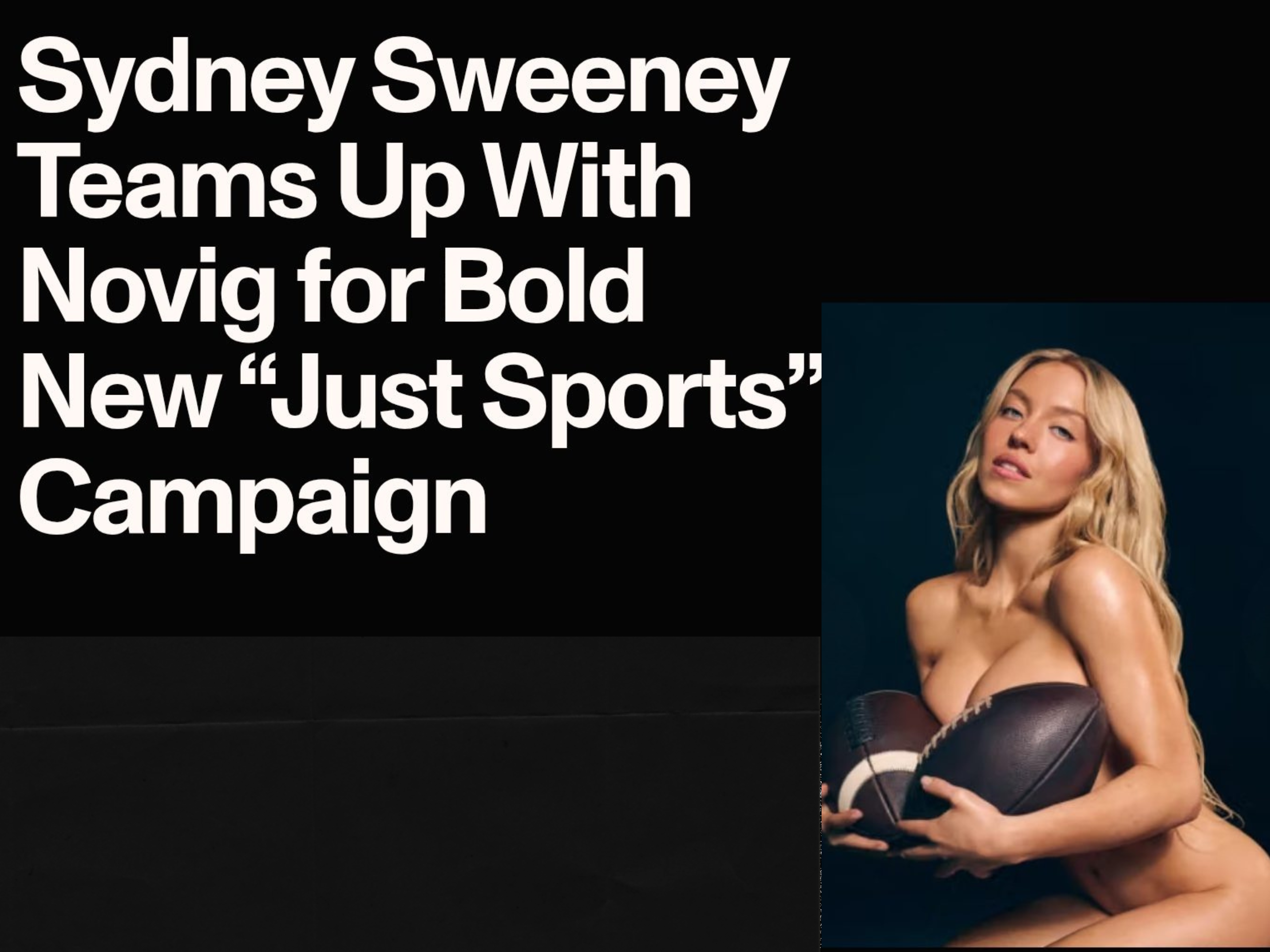
Sydney Sweeney is naked again. This time, it’s for sports.
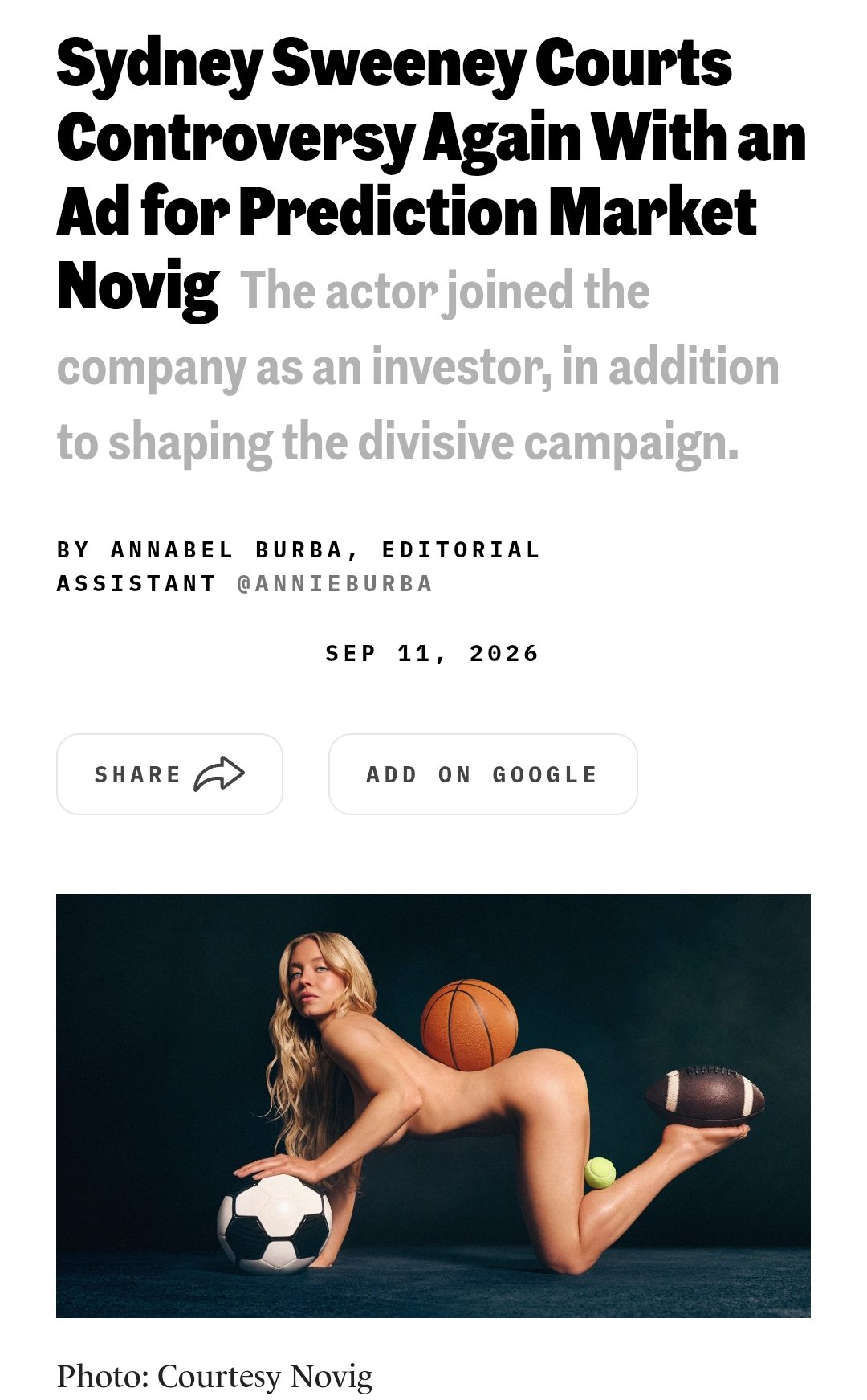
More specifically, she’s nearly naked in a new commercial for Novig, a sports prediction market that launched its first national advertising campaign right at the beginning of football season.
The concept is not exactly complicated.
Sydney is being her sexiest self, shot in a number of positions where her assets are vaguely concealed by footballs, hockey pads and other sports equipment. She repeatedly tells us it’s “just sports.”
That’s pretty much it.
It’s not particularly pithy script writing. There’s some ball-play double entendre. Sydney looks good. And Novig would like you to know that unlike other prediction markets where you can trade on everything from politics to wars, Novig is about sports. Just sports. That’s actually the company’s differentiator.
Subtle? No.
Classy? I wouldn’t call it that either.
Effective marketing?
Well, that’s a more interesting question.
First, Let’s Talk About Who This Ad Is Actually For
If your algorithm looks anything like mine right now, you’ve probably seen the response from female athletes.
Women who run. Women who lift. Olympians. Gymnasts. Women who have worked incredibly hard to build strong, capable bodies are flooding social media with their own version of “just sports.”
Essentially: Respectfully, Sydney, this is what women in sports look like.
And I’m here for it.
My algorithm is full of strong women showing what their bodies can actually do, and I love it. I strapped on my weighted vest for a walk-run this morning. It helps to be inspired by women being proud of themselves and their strength. I want my daughter to grow up seeing women appreciate their bodies for what they can accomplish.
And female athletes have a legitimate point. Several prominent athletes have criticized the campaign specifically because they don’t want women in sports represented as pinups instead of athletes.
But ladies, I have to tell you something.
We are not the audience Sydney was looking to land.
This wasn’t a campaign about women’s sports.
It wasn’t a campaign encouraging women to bet on sports.
It wasn’t an attempt to redefine the female athlete.
It was a highly sexualized ad for a sports prediction platform launching its first national campaign at the beginning of football season.
That’s it.
Sometimes Sex Sells. That Doesn’t Make It Sophisticated.
Novig describes the campaign as bringing its “Just Sports” positioning to life with “confidence, humor and a playful edge.” Sydney Sweeney described herself as closely involved in the creative and messaging, and she joined the company as a strategic partner and equity holder.
I’m going to disagree with the “playful edge” description.
It’s a pinup.
Let’s call it what it is.
The company has also pointed out that its product is limited to people 21 and older. That’s true. CEO Jacob Fortinsky defended the adult nature of the campaign by pointing out that trading on Novig is 21+.
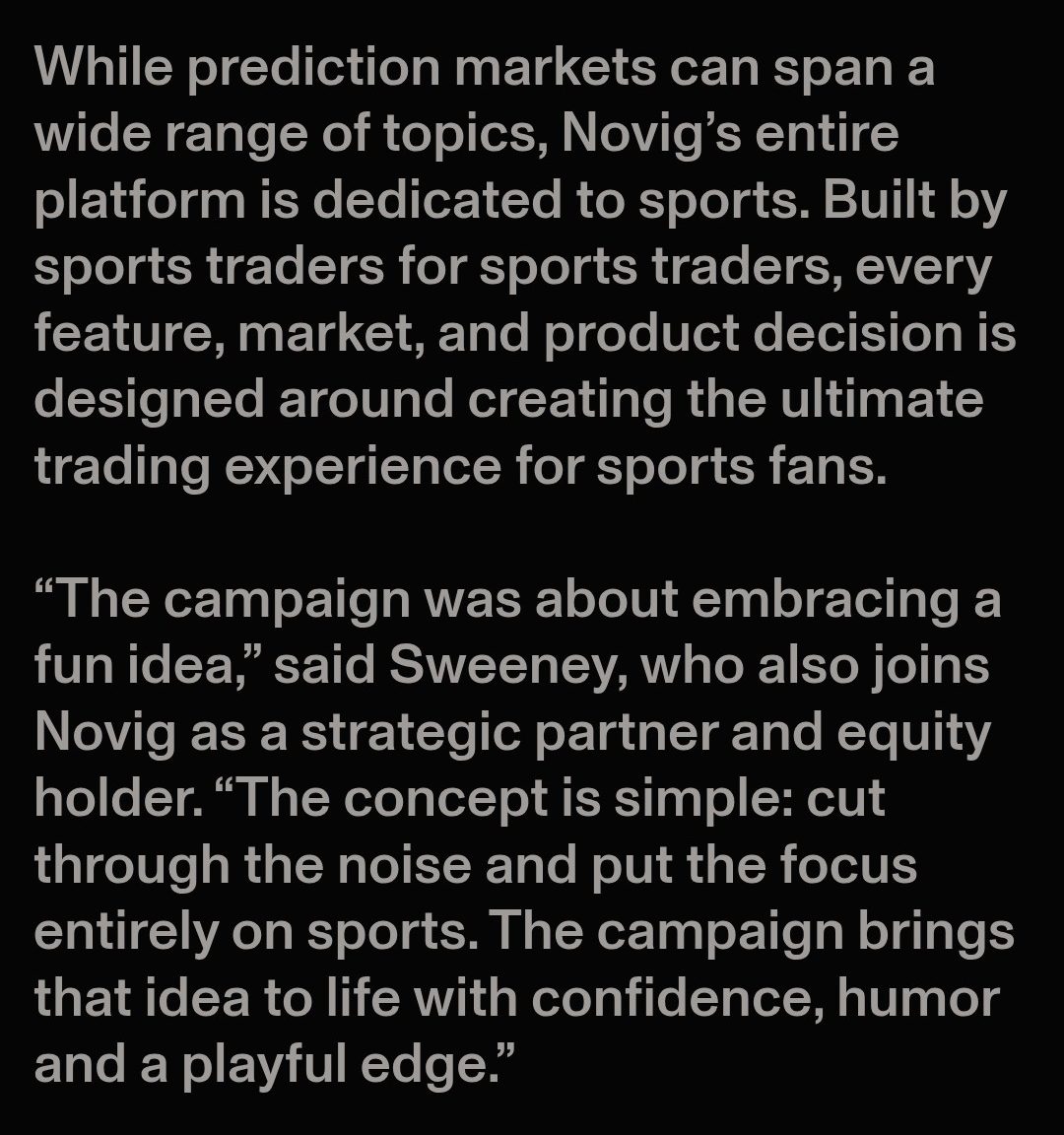
But suggesting that somehow makes the advertising itself adult-only feels naive at best. The campaign is widely circulating across social media. In fact, that’s precisely why we’re all talking about it.
This wasn’t an accident.
It was cavalier. It was provocative. And it was very clearly intended to get eyes.
Mission accomplished.
Because the Numbers Are Kind of Ridiculous
Five days after launch, there’s very little question that Novig got noticed.
Inc. reported that the campaign had already generated 24.5 million Instagram views and 433,000 YouTube views by September 11.
More importantly for a relatively unknown brand, the conversation around Novig exploded.
Before the campaign, Novig averaged about 392 brand mentions per week. After the campaign launched, that jumped to 4,633 mentions, according to an analysis using Meltwater reported by Inc.
That’s a 1,180% increase in brand mentions.
And Novig wasn’t coy about what it wanted.
Fortinsky told Front Office Sports that Sweeney has an unusual ability to capture attention and that, for Novig, her involvement “forces us into the national discourse.”
He also described the campaign as a “very concentrated bet” and said the company chose to put the bulk of its marketing dollars going into football season behind it.
They wanted to make a splash.
They made a splash.
Sydney Isn’t Just the Model Here, Either
This is the other part of the story that makes it interesting from a marketing perspective.
Sweeney isn’t simply a celebrity spokesperson who showed up, got naked, collected a check and left.
According to Fortinsky, she approached Novig because she was interested in an equity partnership. She is now both a strategic partner and equity holder, although neither her ownership percentage nor what she was paid for the campaign has been disclosed.
Inc. also reports that Sweeney played a significant role in developing the campaign, including its creative and messaging.
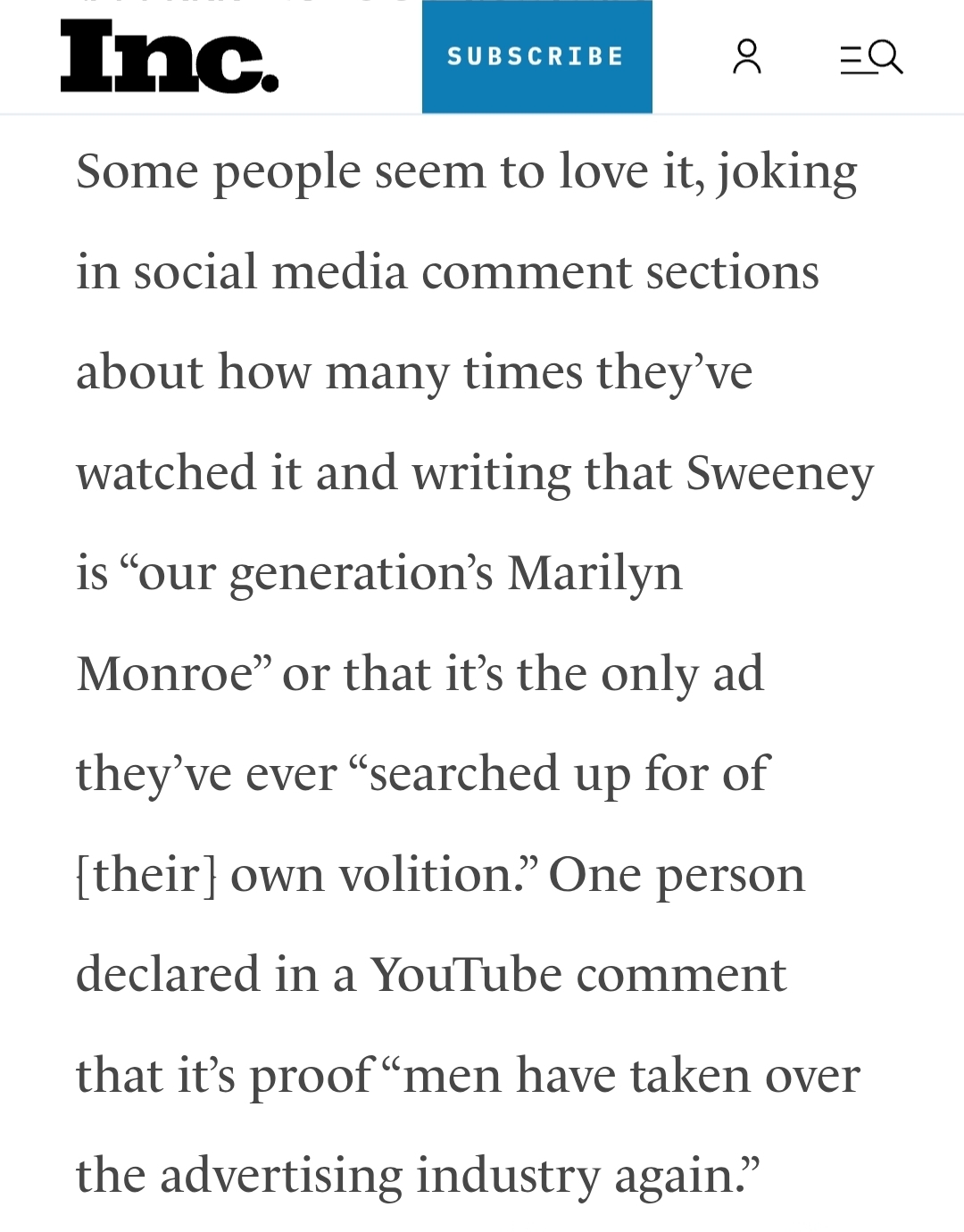
So if Sydney is comfortable being presented as what some commenters are calling our generation’s Marilyn Monroe, explicitly sexualized in advertising for a company she owns a piece of, that’s her decision.
You don’t have to like it.
She apparently does.
And the people Novig actually needs to reach may like it quite a bit.
That’s the Part Marketers Need to Understand
Novig didn’t need women to like this ad.
It needed sports bettors to notice Novig.
Five days later, the evidence that people have noticed is pretty overwhelming.
Does that mean it’s brilliant marketing? Not quite yet.
Views aren’t customers. Mentions aren’t registrations. Controversy isn’t revenue.
We don’t have public data showing how many people downloaded Novig, opened accounts, deposited money or became active customers because they saw Sydney Sweeney holding two footballs over her boobs.
Those numbers will ultimately tell us a lot more about whether this was successful marketing.
But as a brand-awareness campaign?
It’s hard to argue that it hasn’t worked.
And Yes, the Backlash Is Real
I completely understand why female athletes don’t want women in sports represented as pinups.
I also understand why some people look at this campaign and see a Mad Men throwback, or evidence that advertising is sliding backward.
But it’s also one campaign.
It doesn’t have to become the poster child for women in sports.
It doesn’t have to be everyone’s favorite.
It will have its moment. People will argue about it. Someone else will do something outrageous next week. The internet will move on.
And Novig will be significantly better known than it was before Sydney Sweeney picked up those footballs.
That’s the marketing lesson.
Your Marketing Doesn’t Need Everyone to Like It
One of the biggest mistakes businesses make is trying to create marketing nobody could possibly dislike.
So they water it down.
They make the joke less funny. The opinion less pointed. The creative less interesting. The language more generic.
They try to talk to everybody.
And they become incredibly easy for everybody to ignore.
Your marketing doesn’t need everyone to like it.
It needs the right people to like it, understand it and act on it.
Criticism from outside your target market isn’t necessarily evidence that your marketing failed. Sometimes it simply means your brand got noticed.
Criticism from inside your target market?
That’s something you’d better pay attention to and adjust to quickly.
And if you’re deliberately creating a campaign bold enough to put your brand at the center of a national conversation, you’d better be prepared for everything that comes with it.
Know what you stand for.
Know why you made the creative decision.
Know who you’re trying to reach.
And when the interviews start coming, handle the scrutiny with confidence and the right tone.
Because there’s a big difference between accidentally offending people because you don’t understand your audience and deliberately creating something provocative because you understand your audience extremely well.
I’m not putting the Novig campaign in the MKC inspiration folder anytime soon.
But I am absolutely putting its results in the marketing case-study folder.
THIS IS HOW YOU PLAY WITH A VIRAL MOMENT
My personal favorite piece of this entire thing may actually be the response.
I love a good quick-response parody.
When a brand can hear what’s happening in the national conversation, understand why everyone is talking about it, turn the joke around quickly and poke fun at all of the elements being discussed without taking itself too seriously, that’s playful humor.
It’s also a reminder that you don’t always have to create the viral moment yourself.
Sometimes great marketing is being smart and fast enough to recognize one while it’s happening, know exactly how your brand fits into the conversation, and jump in before everyone moves on.